How to Layer Necklaces: Length, Balance & Personal Style
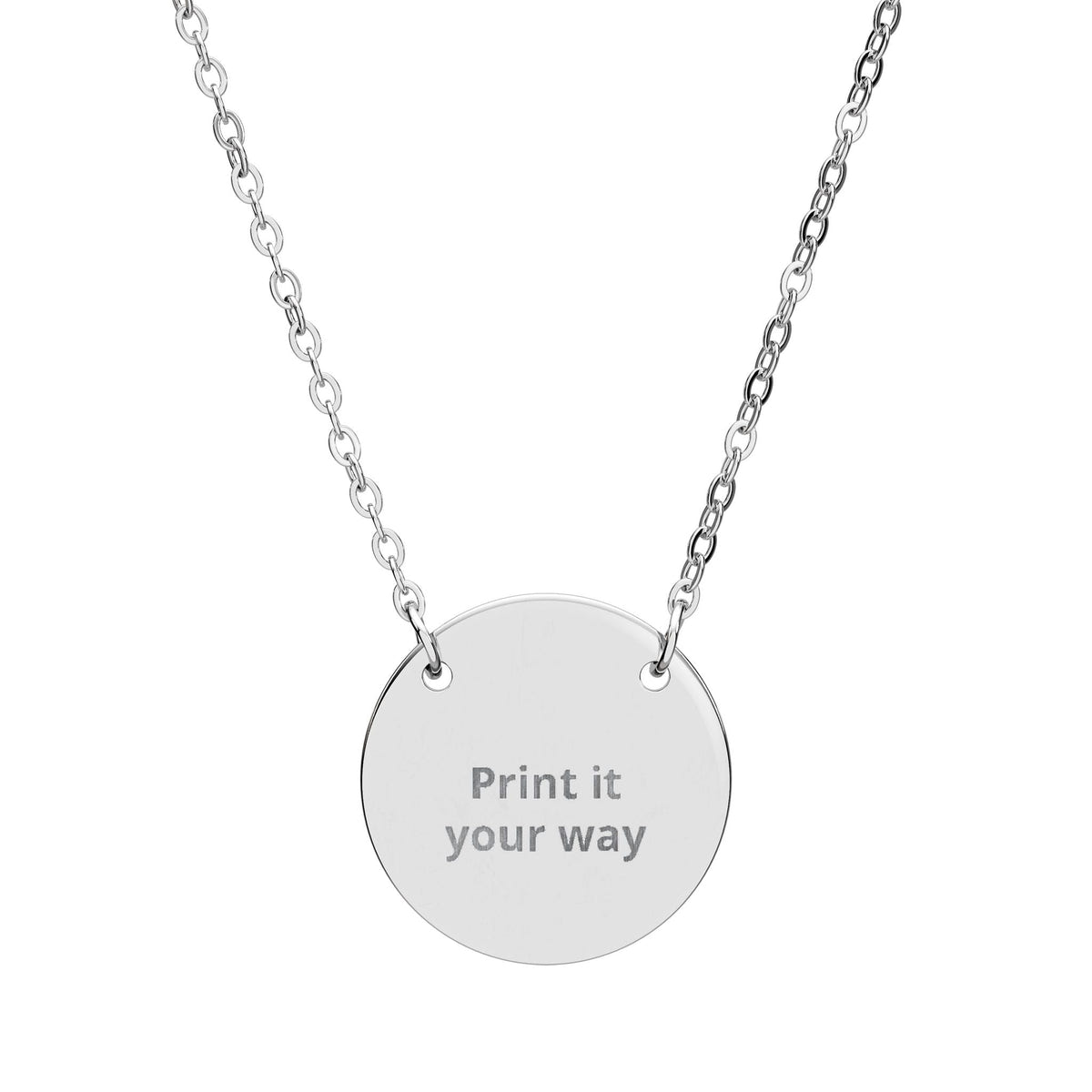
Layering necklaces works best when each piece has a clear role. The goal is not to wear as many necklaces as possible, but to create enough separation, balance and contrast that every piece can still be seen.
For personalized jewelry, layering also creates another decision: which piece should carry the meaning, and which pieces should support it visually?
Start with necklace length
Use length as the first organizing principle. Two necklaces that sit in almost the same place can overlap, twist or compete for attention. A shorter chain can frame the neckline while a longer pendant creates a second visual point lower on the chest.
Exact lengths vary by product and wearer, so use our Necklace Length Guide and the individual product page before choosing a combination.
Give the focal piece room
If one necklace carries a name, date, initials or meaningful engraving, let that piece be the focal point. Supporting chains can be simpler so the personalized pendant remains easy to notice.
A practical rule is to avoid placing two visually dominant pendants at nearly the same height. Separation usually creates a calmer result.
Match the layers to the neckline
The neckline changes how much space the jewelry has. Open necklines often leave room for a visible layered arrangement, while higher necklines may work better with a longer pendant or a simpler single-chain look.
Rather than treating neckline rules as fixed, look at where the clothing ends and where the necklaces begin. The jewelry should have enough visual space to read clearly.
Mix scale more carefully than quantity
Variation can make a layered look feel intentional. A fine chain beside a slightly more structured chain can create contrast, while several pieces with the same weight, pendant size and length may merge visually.
Start with two necklaces. Add a third only if it creates a distinct layer rather than filling empty space.
Can you mix metal tones?
Yes, when the combination feels deliberate. Mixing metal tones can work especially well when another detail—such as shape, chain style or pendant scale—connects the pieces. If you prefer a quieter look, keeping the same metal tone is the simplest way to create visual continuity.
Always check the actual finish and material on the product page rather than assuming similarly colored jewelry uses the same construction.
Layering personalized necklaces
When one or more pieces are personalized, decide whether the layers should tell one story or several separate ones.
- One focal memory: use one engraved pendant with simpler supporting chains.
- Family layers: separate initials, names or dates across different pieces instead of crowding one engraving.
- Private meaning: combine a subtle personalized piece with a more visible decorative necklace.
- Milestone layering: let different pieces represent different chapters or dates.
If you are still choosing the words, start with What Should I Engrave? or use Find Your Engraving.
Build a meaning stack, not just a layer stack
When more than one necklace is personalized, give each layer a different job instead of repeating the same idea. One piece can represent a person, another a place, and another a milestone.
- Love story: initials on the shorter layer, a meaningful date on the longer layer.
- Family stack: one pendant for family initials, one for a place or home reference.
- Memory stack: a small name or initial paired with a longer pendant carrying a date or coordinate.
- Everyday meaning: one plain anchor necklace plus one personalized focal pendant.
Two clear meanings usually feel stronger than trying to place every memory onto every piece. If the words themselves are still undecided, start with What Should I Engrave?.
How to reduce tangling
Layered necklaces can still move during wear. Different chain lengths, clasp placement and pendant weight can help reduce direct overlap, but no arrangement can guarantee that chains never tangle.
Remove necklaces before sleeping, exercise and activities where chains may catch or twist. For storage and cleaning guidance, read our Jewelry Care Guide.
A simple two-necklace formula
- Choose the necklace that matters most.
- Place it where the pendant is easy to see.
- Add a second necklace that sits clearly above or below it.
- Check the combination with the neckline you actually plan to wear.
- Remove one piece if the result feels crowded.
Style should still feel like you
Layering is useful when it helps your jewelry feel more personal, not when it turns getting dressed into a rulebook. Some outfits need one meaningful pendant. Others can carry several layers. The strongest choice is the one you will actually enjoy wearing.
Explore necklaces, browse personalized jewelry, or continue through The Journal guide hub.